Exploring the wonders of geology in response to young-Earth claims...

Never been here? Please read my guidelines and background posts before proceeding!

Tuesday, April 26, 2011

A fish out of water: why did the shark cross the berm?

A fascinating fossil find

Shark teeth are some of the most spectacular remnants of life one may come across in the field. Thus, I can only imagine the surprise on Kentucky coal miner Jay Wright's face when he pulled half a jaw (teeth and all) from a coal seam back in February. The marine shark, Edestus, is estimated to have been more than 20 ft. long, making it one of the larger specimens of that genus.

The shark-bearing coal is Pennsylvanian in age (~299–318 Ma), and surrounded stratigraphically by marine shale and carbonate rocks (shallow subtidal/supratidal grainstone and boundstone). Fossils of small, marine invertebrates are apparently not uncommon in the coal, but the shark specimen represents the first, large vertebrate find.

A fish out of water?

To any keen observer, one obvious question may arise: how did the remains of a giant marine shark end up in the swampy backwoods of ancient Kentucky? Traditionally, coal is thought to have formed in densely vegetated swamps, landward of a sandy berm. Presumably, the shark did not "make a jump for it" at high tide, Free Willy style, only to find himself flopping around a freshwater mire. Thus the fossil find seems to strain at the conventional wisdom behind coal geology.

Brian Thomas at the Institute for Creation Research (ICR) took this approach in a recent article entitled "Shark Jaw Opens Questions about Coal Formation". He cites an introductory geology textbook to show that coal is thought to have formed "when millions of years of plant debris accumulated into peat bogs at the bottom of ancient swamps," and then asks, "...how did a huge shark find its way into a swamp?"

Before answering this question, we should consider Mr. Thomas's alternative explanation. Following a model by Steve Austin of ICR (whose Ph.D. dissertation focused on these very coal beds), he suggests:

"A catastrophic flood event ripped up whole ancient forests, and then transported plant and animal debris into low-lying areas. A subsequent series of tsunami-like waves then carried sediments over the top of the plant debris."

According to Mr. Thomas, this scenario could explain some geological features of the coal (absence of root casts, sharp transition to the bounding rock types, broad lateral continuity), as well as the "out of place" marine fossils.

Coal formation: the rest of the story

While potentially convincing at the surface level, Mr. Thomas's argument hardly does justice to the complex nature of sedimentary deposition, as well as the process of coal formation. Here are a few facts to consider:

1. Mr. Thomas begins by telling us the "standard textbook story is that coal seams were formed when millions of years of plant debris accumulated into peat bogs..." (emphasis mine). Unfortunately, it seems many YEC's believe that geologists fall back on "millions of years" to explain every process, and the phrase now possesses a decidedly pejorative connotation among the YEC community. With regard to peat accumulation in swamps, however, the timescale is significantly shorter (on the order of hundreds to thousands of years).

2. Coastal mires, though located on land, are not free from marine influence. If you've lived in the southeastern U.S., or simply kept up hurricane news over the past few years, then you've already seen this in action. Storms, and even tsunamis, are capable of bringing saltwater, sediment, shells, and yes, the occasional, disarticulated jaw of a large shark, onto the land. If the latter items end up in a calm, oxygen-deprived swamp, then the preservation potential is quite high. Such events are relatively rare, to be sure, but coal seams in western Kentucky contain abundant evidence of such marine influence (Eble et al., 2001). In fact, Hower and Williams (2001, p. 147) cite Dr. Austin's Ph.D. thesis (Austin, 1979), which "described marine shale partings bearing marine fossils within the coal."

3. The close association of marine rocks with coal is also due to the fact that many coals form in interdistributary bays, in addition to terrestrial swamps. In both cases, the oxygen-poor, heavily vegetated ecosystems are immediately adjacent to marine depositional environments (river delta, shoreline sands). In the rock record, adjacent depositional environments are recorded as a succession of distinct layers—a process described by Walther's Law. This is precisely what we find in the coals of western Kentucky (e.g. Dewet et al., 1991), which only comprise about 5% of the rock layers, because...

4. Coal seams form when plant matter accumulates in swamps, but in a prograding, marginal marine setting. Mr. Thomas cites an article by Stuart Nevins (found here) to suggest that the shear size (lateral extent, not thickness) of Pennsylvanian coals in this region is more consistent with catastrophic deposition. There, Mr. Nevins states that "no modern swamp has an area remotely approaching the great Pennsylvanian coals." Both authors fail to take into account, however, that coastal swamps migrate as sedimentation moves the coastline seaward during periods of low sea level. The result is a horizontally continuous layer of rock that is much larger than the depositional environment in which it was formed.

4. Coal seems thin and thicken as one traces them out laterally. They also tend to interfinger with marine lithologies (Eble et al., 2001). This phenomenon is very well explained by the process described above, but makes little sense in terms of catastrophic deposition.

5. Western Kentucky coal seams are relatively rich in sulfur (2–13 wt. %) due to fluid interaction during mire development. Seawater, for example, is very rich in sulfate, and may contribute to the high sulfur content through repeated incursion (from storms, etc.) over thousands of years. Mr. Thomas must account for the high sulfur content of these coals and, simultaneously, the low sulfur content of others.

6. Mr. Thomas states that "modern peat bogs are thoroughly penetrated by roots. Coal seams show no trace of these root masses." Eble et al. (2001) point out, however, that most coal seams are underlain by paleosols with abundant roots. Root structures are typically lost within the coal seam due to degradation of organic matter before and after burial (thermal maturation). In fact, the low oxygen content of swamps is due to the constant breakdown of organic matter, roots included.

Concluding thoughts: the culinary art of coalification

Perhaps the most important aspect of western Kentucky coal beds is the long journey from decaying plant matter to an economically useful resource. In the article cited by Mr. Thomas, Stuart Nevin erroneously rules out time as a factor in coalification. He bases his reasoning on the fact that some geologically old coals are less mature than geologically young coals. But when it comes to any petroleum product (including coal), maturation is a function of both time and temperature.

Imagine thermal maturity as a fancy term for the 'doneness' of coal. As with cooking a roast, the 'doneness' depends on the oven temperature and the cooking time. If the temperature is very low, the roast can cook for many hours, while an extremely hot oven will blacken the meat within minutes.

Mr. Nevin notes that coal can be converted from plant matter in a number of hours, given enough heat. That is true, but at what temperature have the Pennsylvanian coals of this region been since burial? Substantially lower, at less than 100–150°C. In general, reaction rates (i.e. cooking times) are cut in half for each additional 10°C. So a peat layer at 100°C will take 64 times longer to reach the same thermal maturity as a peat layer at 150°C, and more than 2,000 times longer than a peat layer at 200°C.

Thermal maturity in coal (just like in oil) is a function of both time and temperature, and thus depends on the specific burial history and tectonic setting for each region. It is not enigmatic that some geologically old coal deposits are less mature than more recent ones, since not all sedimentary rocks are buried to the same depth or exposed to the same heat source. Moreover, the current thermal maturity of coals in western Kentucky poses a serious problem for Mr. Thomas's interpretation. What takes only hours at very high (300°C+) temperatures can take thousands to millions of years at the current temperature (~100°C) of coals in the subsurface. Unless Mr. Thomas wants to propose that these coal beds were exposed to extreme heat since the flood (a testable and falsifiable hypothesis), he must admit his model does not allow for nearly enough time to explain all the facts.


References Cited:

Austin, S.A., 1979, Depositional Environment of the Kentucky No. 12 Coal Bed (Middle Pennsylvanian) of Western Kentucky, with Special Reference to the Origin of Coal Lithotypes: Ph.D. Thesis, Pennsylvania State University, 411 p.

Dewet, C.B., Moshier, S.O., Hower, J.C., Rimmer, S.M., 1991, Deposition and diagenesis of a marine-swamp margin; the providence limestone and adjacent coals, western Kentucky: Society of Economic Paleontologists and Mineralogists Core Workshop, p. 169–204.

Eble, C.F., Greb, S.F., Williams, D.A., 2001, The geology and palynology of Lower and Middle Pennsylvanian strata in the Western Kentucky Coal Field: International Journal of Coal Geology, v. 47, p. 189–206.

Hower, J.C., and Williams, D.A., 2001, Further examination of the ragged edge of the Herrin Coal Bed, Webster County, Western Kentucky Coal Field: International Journal of Coal Geology, v. 46, p. 145–155.

Saturday, April 23, 2011

Radiometric Dating Recap: a response to Mike Riddle

"Δεινον δ'εστι η μη 'μπειρια..." -Αριστοφανης

Does radiometric dating prove the Earth is old? Answers in Genesis author Mike Riddle invited readers to skepticism in an article responding to this very question. Therein, he demonstrated how easily one may cast doubt on conventional interpretations of model ages from radiometric dating techniques—at least for those unfamiliar with the process and typical results. How did he accomplish this goal?

1. Assert that a "straightforward reading" is the only proper approach to Scripture, and designate any deviation from this a compromise on the veracity of God's word.

2. Offer a simplified description of how radiometric dating works in the most ideal case.

3. Remind readers of the assumptions behind "model ages" (without letting them know what a "model age" actually is).

4. Offer anecdotal evidence in which model ages are in conflict.

5. Assure readers that "conventional" explanations for the discordance have been thoroughly ruled out.

6. Conclude that the only reasonable explanation for discordance among unpublished data—which represent a tiny fraction of results from the world's geochronologists—is a past, unquantifiable change in the rate of nuclear decay in radioactive elements.

7. Divert readers from the obvious heat problem (sections 3–5; Isaac, 2007) associated with this physical model of Earth history by deeming it "a new and exciting opportunity for creation research."

I understand that Mr. Riddle's intention is to convey, in popular terms, why he does not accept published ages, and I sympathize with his desire to find concordance between God's word and creation. Having an obligation to the truth, however, I feel it necessary to comment that his approach is misleading, particularly to those inexperienced in geochronology.

1. What is a straightforward reading?

In the past 150 years, scholars have uncovered a wealth of information regarding the cultural and literary world in which the Genesis narrative was drafted. The theological implications of these findings have been debated on all sides, and such continues today. But despite the lack of consensus, it is evident that a "straightforward reading" is more elusive than originally proposed. Moreover, recent perspectives on literary criticism show that the reader's own culture and environment play an equally important role in the interpretation of ancient texts.

While I affirm the perspicuity of Scripture (its theological message can be understood properly across time and culture), I think Mike Riddle concludes prematurely that a "straightforward" reading reveals the Earth is actually thousands of years old. I have no doubt that our post-Enlightenment mentality has crept into this conclusion unnoticed, causing believers and unbelievers alike to read scientific and historical details back into the ancient text. Mr. Riddle's surface-level reading of the Genesis narrative is not sufficient reason to dismiss a priori the conventional interpretations of radiometric dates.

2. Any meaningful critique of radiometric dating must take into account the complexity behind analyses and interpretations, as well as the wide range of geological applications.


Simply put, radiometric dating is not just a method used to date igneous rocks using an hourglass model of parent/daughter isotopes. Nearly as many analyses are now performed on both metamorphic and sedimentary rocks, and the respective methods for all three systems are quite complicated (usually involving 3 or more isotopes). Mr. Riddle overlooks this point, presumably to cast doubt on the age of fossils contained within sedimentary rocks (which, he seems to believe, cannot be dated directly).

But for those interested, metamorphic histories are commonly reconstructed by dating minerals that differ in closure temperature, and/or minerals that form during metamorphism (such as garnet). Multi-domain diffusion models (constructed from 40Ar/39Ar age spectra) are used to interpret thermal histories after crystallization. Combined, these techniques offer a powerful tool to investigate mountain building processes, since they tell us when the rock was at a given temperature and pressure.

Sedimentary rocks commonly contain authigenic minerals (as well as early-stage cements like calcite) that can be dated individually. Such minerals are more susceptible to alteration than in igneous systems, but a bulk of the data are consistent with the conventional geologic timeline. This point is particularly relevant, because Mike Riddle (following the RATE team) interprets long ages of igneous bodies as a product of accelerated nuclear decay during the Flood. If decay rates after the Flood were closer to modern measurements, however, then diagenetic cements should yield very young (indistinguishable from zero) ages. Since they don't, the young-Earth model cannot currently explain the range of available data.

Detrital zircons and micas can also be dated individually to constrain the age of a sedimentary rock. Since these minerals are inherited from igneous rocks that have already crystallized, it is understood that their ages will always be older than the sedimentary rock itself. The youngest ages of detrital zircons/micas, therefore, give the maximum age for deposition. This technique may also reveal the main source of sediments. If a majority of zircons, for example, are about 55 m.y. old, then one could look for the nearest igneous/metamorphic body that dates to 55 Ma to find the primary sediment source.

3. Every radiometric date represents a model age. Nobody claims that model ages actually 'prove' the age of anything. "Model ages" are termed such because they rely on a scientific model. If the physical conditions and various assumptions within the model did not hold for a given sample, then the model age does not equal the true age of the rock. Moreover, all model ages in igneous systems represent cooling ages—not necessarily the age of crystallization. Slowly cooling or reheated rocks yield different ages for different minerals (keep in mind that isochrons constructed from several minerals assume those minerals reached their respective closure temperatures at the same time).

Finally, model ages do not prove the antiquity of rocks, because a history with uniform natural laws is already assumed within the model. So yes, model ages are contingent on the uniformity of nature and assumptions about the rock's physical history.

On the other hand...

4–5. The overwhelmingly consistent results from radiometric dating do highly corroborate the interpreted history of geological features (i.e. demonstrate that the interpreted history did in fact take place, or else the data were specifically designed to give this illusion). If this were not the case, the RATE team (referenced by Mike Riddle) would not have resorted to accelerated nuclear decay as a means to explain long ages. Instead, they would continue to cite discordant age data and geochronologists would be out of business. The fact that thousands of researchers spend millions of dollars each year to date rocks should provide sufficient reason to believe that a vast majority of radiometric dates are concordant.

Another way is to search through scientific literature oneself, or speak directly to a lab manager. I've done both, and I am happy to tell you that radiometric dating works. Within the article, however, Mike Riddle provides a number of tables with results from the RATE team. It's apparent that model ages are not always concordant (agree with each other), so what are we to make of these results?

Young Volcanic Rocks
Mr. Riddle begins by citing cases where young volcanic rocks do not yield "zero" ages. I've addressed this topic at length before, so I will only mention that the apparent problem has been known for more than 40 years. Brent Dalrymple, who invented the K-Ar dating method, discovered early on that several historical lava flows (not most, not even a majority, but some) contained sufficient radiogenic argon to give dates that were too old (~30,000–500,000 years). He predicted that the lava flows contained material inherited from older rocks (such as in fluid inclusions or microscopic xenoliths), but was unable to test this prediction. As technology improved, his hypothesis was confirmed, and young volcanics are now dated by more sophisticated methods (40Ar/39Ar, electron-spin resonance, thermoluminescence) that need not assume the rocks were originally argon-free.

But these findings have not stopped ICR researchers like Steve Austin and Andrew Snelling from spending thousands of dollars on rigged, radiometric dating games. For example, samples from Mt. St. Helens were shipped to a laboratory that openly stated their technology could not detect argon levels in rocks less than 2 million-year-old. Moreover, the only minerals that yielded ages distinguishable from zero were ferromagnesian silicates, which likely crystallized before the eruption (more info here). When historical lava flows are dated using K-Ar isochrons, 40Ar/39Ar, and other methods, the ages are indistinguishable from zero.

Isochron Dating
In the first table (Beartooth Mountains), 4 K-Ar ages are listed along 4 isochron ages. Mr. Riddle concludes that "the results show a significant scatter in the ages for the various minerals and also between the isotope methods." To say that scatter is significant, however, requires some knowledge of the statistical variance for each data set, and uncertainties are not provided here. In fact, the interpreted age from each isochron is within statistical uncertainty of the published age (2,790 Ma), so there is no demonstrable discordance.

Nonetheless, Mr. Riddle exposes his unfamiliarity with such data by noting that "in some cases, the whole rock age is greater than the age of the minerals, and for others, the reverse occurs." What does this mean? In the former case (Rb-Sr isochron), the difference is found in the population (number of samples) for each isochron age. One is built from 5 points; the other from 30. The reverse is true for K-Ar dates, because some minerals do not retain argon as well as others. It is not unexpected that the "Quartz-plagioclase" mineral yielded a younger date than either biotite or hornblende, given the lower retentivity of argon and higher susceptibility to alteration or thermal disturbance.

Recently, I took a closer look at the RATE team's treatment of isochron plots in the case of Precambrian sills from the Grand Canyon. In short, K-Ar data (including those from Austin and Snelling) are consistent with the accepted Rb-Sr isotope age of 1103 Ma. The variation in K-Ar dates listed in Mike Riddle's table (Bass Rapids Sill Sample Results) reflects the complex thermal history of the rocks, which have also been highly altered. In other words, the physical assumptions of each model age were not met. Alternative approaches demonstrate that these assumptions (no loss of daughter element; no gain of parent element) were falsified for the K-Ar method, and give a more clear and consistent estimate of the initial cooling age (of course, Mr. Riddle does not cite all the age data available).

Two other isochron methods (Pb-Pb and Sm-Nd) apparently gave slightly older dates for the Grand Canyon sills (~1.3 Ga), but there are a few suspicious features about the data from Snelling and Austin (2003; published here). First, this age is identical to that of the basement rock through which the intrusive magma flowed. Mr. Riddle cites isotopic mixing as a possible explanation for the discordance but claims that it was ruled by the authors. Such is not the case, however, and previous workers have interpreted the geochemistry of the sills to reflect incorporation of the country rock. In the case of Pb-Pb isochrons, a false isochron may be constructed from mineral samples that formed at very different times, but were part of an isotopically homogenous reservoir at one time. The false isochron age indicates the last point at which the samples were in isotopic equilibrium (in this case, about 1.3 Ga—the age of the country rock).

Secondly, the results of each isochron are statistically imprecise. In fact, the 1249 million-year Pb-Pb isochron age is actually within statistical uncertainty (±140 Ma) of the conventional age of the formation! The Sm-Nd age is beyond 2σ from the conventional, but the uncertainty (±170 Ma) is still unreasonably high. Such imprecision in the calculated isochron age is likely due to the fact that the samples were not truly cogenetic. In other words, they don't form a true isochron (this is most obvious in the Sm-Nd isochron). The major element geochemistry is variable enough between samples to suggest that significant fractional crystallization occurred. Hydrothermal circulation undoubtedly played a role in the rock's history as well. Finally, both isochrons are heavily weighted by felsic, granophyre samples from the top of the sill (which are moderately altered), so the discordance of the isochron ages is circumstantial at best.

6. Forced concordance on the RATE team's data sets causes discordance in the majority of geochronological data. Even giving Austin and Snelling the benefit of the doubt (i.e. ignoring uncertainties and problems arising from alteration), calling for accelerated nuclear decay in Earth history does nothing to solve the discordance. How so?

The reason is that a vast majority of isochron ages are, in fact, concordant. If we suppose that the decay rate of Sm was accelerated more than that of Pb, which was accelerated more than that of Rb, which was accelerated more than that of K, we can manipulate the Grand Canyon data so that they yield the same model age. But this mathematical "fix" would cause nearly every other published age to become suddenly discordant. Thus the RATE team's outrageous proposal would reduce nearly all geochronological data to absurdity for the sake of a handful of samples, but neither Mike Riddle nor the RATE team have been explicitly clear on this point.

7. We can be fairly confident that nuclear decay rates never changed. The first reason is that any major increase in radioactive decay would have left noticeable marks on the planet. Nuclear decay produces heat (the basic premise behind nuclear power plants). Faster decay would produce proportionally more heat. In the most conservative case for the RATE team, 1.1 billion years worth of decay occurred in the Grand Canyon sills during or since the Flood (let's say 5,000 years). That's a 220,000-fold increase in decay rates, on average, over the past 5,000 years, which would have produced enough heat to destroy all life on Earth (as well as the hydrosphere).

Dr. Larry Vardiman at ICR has considered this problem publicly, and rejects the conclusions of the RATE team. I understand that Mike Riddle, along with the RATE team, is confident that a solution will be found (i.e. how to dissipate enough heat to vaporize the planet, and then devise a sound reason behind the arbitrary premise). In the meantime, however, the problem should be stated more explicitly, especially to his lay readership.

Finally, Mike Riddle cites the helium diffusion study of Dr. Russell Humphreys, which I reviewed here, as the clear scientific reason for believing in accelerated nuclear decay. A close look at Dr. Humphreys' tactics shows that he not only employed bad scientific practice, but espoused unwarranted confidence in the results. Dr. Humphreys and others have never repeated the results of this decade-old experiment, but will often remind us that real science demands replication of results.

In the meantime, hundreds of other researchers have taken advantage of helium diffusion in zircon as a means to date exhumation (uplift) events in sedimentary rocks and igneous plutons. Yet not a single one yields a 6,000-year age. Ages based on helium diffusion in zircon are commonly consistent with the conventional geologic timescale, and falsify Dr. Humphreys' hypothesis thoroughly.

Conclusion


Does radiometric dating prove the Earth is old? Well, no, in a strict philosophical sense. But it does highly corroborate the conventional understanding of Earth history and the geologic timescale. Moreover, it falsifies the young-Earth interpretation of Earth history on every point. Despite their vested efforts over several decades, members of the RATE team have not been able to explain the range of geochronological data in a young-Earth paradigm. Nor have they been able to discredit the published results of geologists. Mr. Riddle's closing comment that "radiometric dating methods are highly unreliable" is not convincing to those familiar with the process and results, because it simply does not correspond to reality.

"Inexperience is a dreadful thing..." -Aristophanes

Sunday, April 17, 2011

"Rock layers folded, not fractured" — or are they?

In the last of a six-part compilation of geological evidences for the Flood, Dr. Andrew Snelling argued that the absence of brittle fractures in folded strata constituted reason to believe that the sediments were laid down in rapid succession. "When solid, hard rock is bent (or folded)," he says, "it invariably fractures and breaks because it is brittle." As an example, Dr. Snelling refers to the Tapeats Sandstone and Muav Limestone of the Grand Canyon succession, which were folded into a broad-scale monocline long after they were deposited. He claims that folding in the rocks "did not cause them to fracture and break," and so the "only logical conclusion is that the 440-million-year delay between deposition and folding never happened!" In other words, folding took place shortly after they were laid down—within the last 5,000 years—but the sediments have since had time to lithify (transform into solid rock).

A challenge to 'deep time'?

The lack of faults and fractures poses a potential problem to the conventional geological understanding of sedimentary strata. If you have driven through a mountainous region, you have likely seen folding in sedimentary layers, where solid rock appears to have been bent into tight—sometimes hairpin—curves without compromising the structural integrity of the individual layers. If these layers were deposited over thousands to millions of years, then given as much or more time to harden into solid rock, and finally bent under high stress at an even later time...well, shouldn't we see some evidence for this?

Before answering this question, I should clarify part of Dr. Snelling's reasoning. If the absence of brittle fractures in folded strata is evidence that deformation took place before the sediments had time to lithify, should the presence of brittle fractures be considered evidence of a time gap between deposition and deformation? Wouldn't Dr. Snelling's argument predict that we should only find fractures in the most recent deformation events, but not in rocks that were folded during or shortly after the Flood? I'll return to this point later.

Brittle and ductile deformation—wait...what?

If these words sound foreign to you, don't shy away. Brittle deformation simply refers to processes that break a solid—cracking a block of cement with a hammer, for example—while ductile deformation occurs when the solid stays intact, but the warping cannot be reversed. Imagine a 'strong man' bending a rod of iron: the metal never cracks or fractures, but neither does it return to its original shape (like a rubberband) when the force is withdrawn. This is ductile deformation.

Rocks can undergo both brittle and ductile deformation, depending on the physical conditions. When rocks are cold (less than ~300°C) and at low pressure (within a few miles below the surface), they tend to fracture under stress—like a block of concrete. On the other hand, rocks act more like a metal bar at higher pressure and temperature, and deform plastically.

But not all rocks are the same. Most limestones and diatomites, for example, have high strengths, and are quite prone to brittle deformation. Mudstones and evaporites, on the other hand, have little to no strength, and will rarely fracture. Salt diapirs in the Gulf of Mexico and elsewhere demonstrate the ability of evaporites to deform plastically under pressure. The strength of rocks depends also on the type of cement holding the grains together (silica vs. calcite vs. hematite) and the degree of cementation. Consequently, a well cemented quartzite (silica grains and cement) can only escape brittle deformation at relatively high temperature and pressure. But low redox conditions (absence of oxygen), low water:rock ratios, and the presence of hydrocarbons can prevent sandstones from lithifying—even after deep burial—so it is possible to find ancient sandstone bodies that behave as a liquid (e.g. sand injectites).

In short, there are geological reasons to expect both modes of deformation in ancient rocks. The result depends on the specific history of each rock. How deeply was it buried? What was the burial temperature? Was the rock well cemented? What is the grain composition? These questions are useful to geologists, not only when interpreting the details of Earth history, but in determining, for example, whether fractures may have formed in a rock at depth. Fractures greatly enhance the permeability of rocks, and thus their ability to carry water, oil, and gas.

In fact, one apocryphal story tells of a woman that dreamed she would find oil on her property. Nobody would take up the challenge to drill on her property, however, because it was situated on the center of Michigan Basin—a structural basin where the oil would be expected to migrate away from the center. Eventually, the drilling effort was successful, because the rocks at the center had undergone brittle deformation as a result of broad-scale folding and the fractures trapped a significant amount of hydrocarbons.

The fact of the matter is...

Nearly all rocks exposed at the surface are thoroughly fractured or faulted, particularly those that have undergone deformation. Typically, the fractures occur at small scales, and so are only visible from up close (i.e. Dr. Snelling's photos could not possibly reveal whether brittle deformation took place). As before, the nature of brittle deformation depends on the rock properties and stresses involved, so one should not make generalizations from a single location (i.e. the Grand Canyon). Nonetheless, brittle deformation is a common process by which strain is released, so that sedimentary rock layers may continue to bend into all kinds of folds while preserving the bedding structure.

In addition to fracturing, however, many rocks can accomodate strain by slow recrystallization. In limestones, calcite components can dissolve under pressure (with the aid of water) and recrystallize at points of lower stress. The result is thousands of microcrystalline veins that run like fibers through the rock (styolites), which are only visible in hand sample or under the microscope. Sandstones and other clastic rocks can also deform slowly, through a similar method of recrystallization. As long as water can migrate through the rocks, it is entirely possible for rocks to bend into hairpin folds without a significant amount of fracturing.

The conventional explanation?

Dr. Snelling mentions another process in passing, and says the "conventional explanation is that under the pressure and heat of burial, the hardened sandstone and limestone layers were bent so slowly they behaved as though they were plastic and thus did not break." Of course, the citation comes from a textbook on structural geology, rather than a specific treatment of his Grand Canyon example. But he continues: "...pressure and heat would have caused detectable changes in the minerals of these rocks, tell-tale signs of metamorphism. But such metamorphic minerals or recrystallization due to such plastic behavior is not observed in these rocks."

Both the Tapeats Sandstone and Muav Limestone were deeply buried at one time (~2 miles of sediment accumulated on top of these sediments in the Grand Staircase region), but nobody would suggest that low-grade metamorphism took place (burial at these depths corresponds to ~120°C). Thus Dr. Snelling's claim that evidence is lacking constitutes a rebuttal to a question that does not exist. Nonetheless, it is fair to ask whether Dr. Snelling has even demonstrated that these rock layers were folded without undergoing brittle deformation. If there is evidence for such, it would be visible in hand sample or thin section (under the microscope), but neither are provided for us.

Until then (or until I am able to visit these rocks myself), I can at least point out that the Muav Limestone comprises a major aquifer in the western Grand Canyon area and hosts several springs. The rock's permeability is primarily due to faulting and connected brittle fractures (secondary porosity). Perhaps Dr. Snelling did not look close enough?

Dr. Snelling's argument works against him

Regardless of the nature of rock layers in the Grand Canyon, there are abundant example of brittle deformation in rocks elsewhere. A Google image search for "anticlinal tension fracture" will get you started without having to leave home. But next time you do find yourself hiking or driving past folded sedimentary strata, take a close look. Most rocks will contain abundant evidence for brittle deformation as a result of folding or uplift—and now you know what to look for!

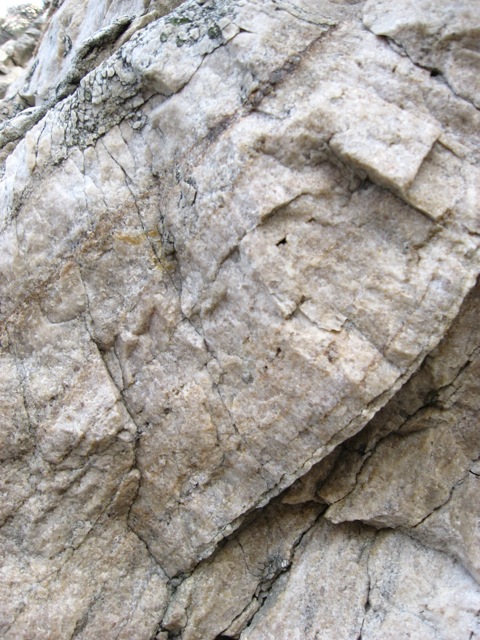
I have also provided a couple pictures at the bottom of this post. These rocks represent the equivalent of the Tapeats Sandstone and Muav Limestone in northern Utah (Ogden Canyon), where the rocks have also been folded on a broad scale (during propagation of the Sevier Fold-Thrust Belt). In the picture on the left, the brittle Tintic Quartzite (silica grains and cement) has fractured throughout and even shattered in some points. On the right, anticlinal tension fractures are visible in the Maxfield Limestone (see Dr. Snelling's cartoon of how these form).

Now I will return to the question I originally asked: if the absence of brittle fractures in folded strata is evidence that deformation took place before the sediments had time to lithify, should the presence of brittle fractures be considered evidence of a time gap between deposition and deformation? I would answer yes. These sorts of fractures do not occur in unconsolidated sediment, so the rocks must have been well cemented at the time of deformation. In the Utah example, deformation must have occurred prior to the development of Lake Bonneville (the glacial-maximum equivalent of the Great Salt Lake). When was this, according to Dr. Snelling?

In an effort to provide evidence of deposition in rapid succession during the Flood (and deformation immediately thereafter), Dr. Snelling cites one of the most powerful arguments against his interpretation of geologic history. According to Dr. Snelling's view of the Flood, we should not expect to find abundant evidence of brittle deformation in these rocks, but in fact we find it everywhere. Brittle faults and fractures are testament, rather, to the deep time behind geologic processes others have come to appreciate.


Brittle deformation in Cambrian strata from Ogden Canyon, northern Utah

Tintic Quartzite, Ogden Canyon, UT
Anticlinal tension fractures in the Maxfield
Limestone, Ogden Canyon, UT

Wednesday, April 6, 2011

A Kingdom-oriented approach to Christian unity: balancing obedience to the Word and compassion for the man

Last week, I commented on the dispute between Ken Ham and Great Homeschool Conventions, concluding that one should not simply dismiss their opponents' words, whether through ignorance or censorship, if one wishes to remain relevant to the public discussion. I argued that Ken Ham's criticism of Dr. Enns and Biologos constituted an act of censorship (though unintentional on the part of Mr. Ham, I believe) in that he publicly attacked the respective party's integrity and commitment to God's word as authoritative, rather than dealing with the specific arguments put forth by each. I termed this kind of response 'censorship' because it effectually silences the words of others by preemptively undermining their credibility.

I am open to the possibility that I have missed where Ken Ham has dealt with Dr. Enns' arguments, or the specific challenges raised by Biologos, with regard to biblical exegesis and how to define inerrancy. Admittedly, I am not familiar with Ken Ham's books (at least those published in recent years), and I trust that he addresses the topics at length there. My impression from his blog posts and audio clips, however, is that he commonly avoids the tough questions when possible, or provides only a superficial response. Again, I would be happy to be proven wrong on this point, but even then I would still encourage Mr. Ham to employ less rhetoric for the sake of dialogue that is edifying to all.

On a related note, one commentator here has pointed out that Mr. and Mrs. Dean responded to Ken Ham by 'censoring' him from the convention, and so my accusation is one-sided. That is true, in one sense, and I'm glad the point was raised. Thus I need to qualify my accusation: Mr. and Mrs. Deans' response ("act of censorship") was qualitatively different in that they were not arguing against Mr. Ham's position. They wanted Ham's message to be heard, and invited other speakers to present it in his place. The action was disciplinary, not polemic.

Christian unity and fellowship amid disputes

Whether or not you agree with my assessment of the situation, I have recalled it here to raise a more important question: how should Christians approach others in the church with whom we disagree? And does our method of resolution depend on the point of disagreement? If we disagree, for example, on whether to allow musical instruments during worship, do we seek reconciliation one way, and if we disagree on the deity of Christ, do we take a wholly different approach?

Ultimately, this question is too broad for a blog post, so I merely want to make a few observations. First, consider the two examples above. I think the majority Christian response would be: "The choice to use (or not) musical instruments depends on the congregation, or might be a pastoral question; but on the deity of Christ, there is no room for discussion and compromise—any disagreement on this critical issue warrants excommunication (treating one as outside of Christian orthodoxy and/or outside of the church)."

On the one hand, we have issues that seem trivial to most observers (from within and without). What kind of songs can/should be sung in worship? Which translation of the Bible should we use? Can art can be hung in a place of worship? On the other hand are more fundamental, sharply defined doctrines, which have classically defined the Christian faith: the deity and messiahship of Christ, trinitarian monotheism, baptism and eucharist, the resurrection, justification by grace through faith. The former set of questions are typically resolved by the local eldership/pastor, while the latter are defined (e.g. Nicene Creed, Westminster Confession) and upheld (consider the recent reaction to Rob Bell) on larger, ecumenical scales.

Somewhere in the middle are topics debated quite frequently amid interdenominational exchange: the mode of baptism, covenant status of children, eschatological hope (or non-hope) for the church, role of law in Christian piety, election and the scope of the atonement, and—should I say?—creation. Many Christians effectively reach across these doctrinal boundaries (e.g. Desiring God Ministries), but the prevalence and openness of debate has the potential to wear on the human spirit and cause tension, if only intermittently.

So far, this structuring to Christian disputes may seem obvious, or even too simplistic. Well, I am guilty on both accounts. But let me move on to my second observation. All of the issues mentioned above have been used by Christian congregations, at one point or another, to break fellowship with others. Not simply to form a new congregation or denomination, but to sever dialogue and cast out. What some deem trivial quibble (or part of Christian cultural tradition, not to be bound to the conscience), others may view as a means to bring schism and condemnation.

At the same time, there is great danger in blind ecumenism. If our goal in promoting Christian unity is God's promise through his covenant, then theology matters, and though it may cause tension among us, we cannot treat the pain with apathy. For the church to survive itself, our attempts at reconciliation in doctrinal disputes must embody a healthy balance between obedience to the Word, and compassion for the man.

Easier said than done? Well, yes, but it has been done—if only once.

A kingdom-oriented approach to reconciliation

The canonical gospels, while rich in story and teachings, were not primarily written to provide an historical account, or even to establish a uniquely Christian belief system. Each gospel recapitulates the story of Israel using early 1st century events to establish that Christ is the climax to the Jewish narrative, and that through Christ, God has inaugurated his kingdom on Earth. Paul summarizes the act in saying "[God] rescued us from the domain of darkness, and transferred us to the kingdom of His beloved Son" (Col. 1:13). As the "image of the invisible God, the firstborn of all creation" (Col. 1:15), Christ represents that to which Adam and, by proxy, ourselves were called, but have failed. Elsewhere, Paul expands on this point through an early Christian hymn:

"Have this attitude in yourselves which was also in Christ Jesus, who, although He existed in the form of God, did not regard equality with God a thing to be grasped, but emptied Himself, taking the form of a bond-servant, and being made in the likeness of men. Being found in appearance as a man, He humbled Himself by becoming obedient to the point of death, even death on a cross." (Phil. 2:5–8)

Unlike Adam in the Genesis narrative, Christ did not "grasp" (as toward the fruit) at his "equality with God" (echoing the serpent's promise to Adam; Gen. 3:4). Moreover, he remained obedient to the Word (his own divine nature and the Father's will) unto a death that was intended to reconcile God's creation to himself—slaves to the Master; sinners to the Holy One.

Theology in practice

What makes the gospels so vital to the life of the church is that they reveal to us not only what Jesus said and did, but who he was and how he felt. Jesus loved his own (John 13:1), even when they were blind to the obvious truth. Through compassion, he revealed the will of God to those that just didn't get it (Mark 10:21). Whether in breaking cultural boundaries (John 4:1–26), or following the road to cavalry, Jesus' compassion for man was such that he faced humiliation on every possible level. He forfeited reputation and reward for the sake of reconciling others to God. But he also wept at the face of death (John 11:35), elucidating the fragility of the human heart. Finally, he succumbed to frustrations with the outright mockery of God's temple (Matt. 21:12), revealing an uncompromising commitment to God's commandments and glory. All in all, the gospels provide a 'kingdom-oriented approach' to Christian unity through the character and person of Jesus.

We will, inevitably, fall short of this expectation when actually dealing with others in the church (or outside). Our interaction is complicated by the fact that each of us is not only fallible, but actually inclined toward reinforcing our own pride and reputation. The poetic words of Alexander Pushkin are very appropriate here: "The illusion that exalts us is dearer to us than ten thousand truths." Unfortunately, it is not always obvious when we lie to ourselves to protect our vested interests. John Calvin's sentiment regarding the first commandment was nearly identical, when he said "the human heart is a perpetual factory of idols."

To compensate for our intellectual frailty and proclivity to idolatry, we cannot afford to shut out the words of others, even when we think the truth is obvious. Accused dissidents of Christian orthodoxy should not "be marked out and avoided," as one blogger put it. Out of respect for the truth, and the hope of God's kingdom, we must face the issue head on—both academically, in open dialogue, and privately, through prayer—as Jesus did toward the Pharisees and as Paul did toward Peter and the Galatians.

When we approach others in theological dispute, we must be willing to place the spiritual well-being of our 'opponent' above our own reputation. This means that in calling others to orthodoxy, we should be eager to call ourselves to the same. Moreover, if our call to orthodoxy is not driven by compassion for the Word and the man alike, then we risk the danger of lapsing into Pharisaism. We may possess a great light, but in keeping it to ourselves, we become dead inside (Matt. 23:27). To put it crudely, we are like a 6-year-old who just told his entire first-grade class that Santa is not real—we may be right, but to what end?

Controversy over creation

There are many Christians who purport that belief in a 6-day creation should make or break fellowship. To them, it falls in that set of fundamental doctrines, on which there can be no compromise. Others, like Ken Ham, are passionate about this doctrine and warn others not to compromise, but are at least willing to openly discuss their reasons behind doing so. I was surprised by Mr. Ham's comments about Dr. Enns, partly because he has long been committed to open dialogue. I hope that despite recent events, he may remain committed to such.

Overall, I am more grateful now for others that are willing to engage in discussion—not simply to make their case but for the sake of truth and the hope of the kingdom. Despite my lengthy criticism of Roger Patterson's published work, I sincerely believe he maintains a healthy balance between obedience to the Word and compassion for others, and so I welcome his comments here. On a similar note, I am encouraged by posts like this one from Dr. Jay Wile (and again here). There, he demonstrates how we can still learn from those with whom we disagree.

Beginning and ending with Christ for the sake of the church

I will end my discussion anecdotally. Last week, I was listening to N.T. Wright's presentations at the Wheaton Theology Conference from last year. In his discussion on Paul, Dr. Wright lamented that in modern Pauline scholarship, very little is said about Paul's theology of the church. Whether or not you agree with Wright's view on Paul, this stinging point must be dealt with: Paul writes much about justification, election, the cross, etc., but his letters are everywhere saturated with the church and Christian unity. Even where he addresses justification at length (e.g. Romans, Galatians), it is done in the context of Christian unity.

Now I understand better a bit of pastoral advice I once heard: "Unless we are constantly reforming our ecclesiology, the rest is for naught." On that note, I hope you will consider my thoughts on resolving divisive controversies within the church (or how my abstract picture can better be put into practice). I am eager to hear your feedback, as well, for this post is hardly meant to be assertive and overbearing.

Wednesday, March 30, 2011

The Japanese tsunami and ICR's 'faulty' understanding of tectonics and uniformitarianism

The calamitous aftermath of the recent earthquake in Japan has, understandably, contributed to countless conversations concerning the proper charitable response, energy policy, and even the humbling power of nature. Nonetheless, I was admittedly surprised when Brian Thomas of the Institute for Creation Research (ICR) published an article entitled Japan Tsunami Demonstrates Destructive Power of Water, in which he conjured a peculiar analogy between those events and his version of the Noachian Flood. He summarizes the relationship as follows:

"If one relatively small earthquake-generated tsunami could cause this much damage in Japan, how much more damage would be caused by the barrage of tsunamis generated by continuous, worldwide earthquakes during the year-long Flood of Noah...?"

Some may question whether it is entirely appropriate to discuss the recent tragedy in light of an act of cosmic judgement, given that many are still in mourning for the losses. I would sympathize with such a reaction, even though I believe it is clear Mr. Thomas did not suggest any theodicean explanation for the events in Japan. That being said, I think it is still worth commenting on whether his proposed geological connection holds up. Do tsunamis hold the answer for interpreting the geologic column as a product of the Flood?

Tsunamis are necessary in a functioning geosphere

Natural disasters do provide an effective teaching tool in geology—albeit too 'close to home' for some—by placing a rather palpable face on otherwise abstract geological concepts. The recent tsunami and previous earthquakes off the coast of Japan are the inevitable result of subduction processes near plate margins. Thick, cold basalt of the Pacific Plate is currently sinking into the mantle, far beneath the eastern coast of Japan. The crustal rocks remain in contact, however, and since this is not a frictionless process, seismic events are frequent. At several miles' depth, the characteristics of the rock are such that significant strain (stretching) can build up, only to be released when it overcomes the shear strength of the rock. If that is not clear, imagine pulling apart opposite ends of a giant taffy bar. If the taffy is too cold (like "just out of the freezer" cold), then it will crack/fragment before splitting. If the taffy is too warm, then it will just keep stretching. Within a certain temperature range, however, the taffy accumulates strain until it snaps, releasing the stored energy all at once.

The magnitude of an earthquake (i.e. the amount of energy released) is a function of the potential strain that can build up before shear failure occurs. Following the taffy analogy, the maximum amount of strain depends on the surface area along a fault plane that falls within a particular temperature range (for silicate rocks, this can fall between ~300°C–600°C, depending on the composition). Suffice it to say that in subduction zones—where both the geothermal gradient (temperature change with depth) and fault dip are relatively low—the maximum potential strain is rather large. Consequently, some of the most violent earthquakes occur at plate boundaries where subduction is taking place.

Although the subduction of oceanic crust results in frequent natural disaster at Earth's surface, it contributes overall to the life of the planet. Subduction zones form island chains and mountain ranges (e.g. the Andes, Sierra Nevadas, Aleutians, etc.) and are concomitant with the creation of new oceanic crust at spreading ridges. Without this tectonic process, Earth's mountains would be free to erode more or less completely, to eventually fill the ocean basins. No subduction, no mountains and oceans. No mountains and oceans, no climate. No climate, no life.

Natural disasters and uniformitarianism

Mr. Thomas quotes Charles Lyell, who originally suggested "the present is the key to the past", to show that uniformitarianism has since accommodated catastrophes like tsunamis and large earthquakes when interpreting the rock record. I think Mr. Thomas would agree, however, that in geologic terms, natural disasters are "everyday natural processes." It is not as though Lyell would object in principle to the interpretation that a turbidite deposit represents a catastrophic, underwater density flow, or that a 5-meter thick lava flow must have taken millions of years to form. Modern geology's objection to Lyell deals rather with his 'big picture' application of uniformitarianism (a steady-state Earth), and is not relevant to the discussion.

Superfaults?

Although the recent earthquake and tsunami in Japan was not the largest on record, or the largest possible, Mr. Thomas is mistaken in terming this a "relatively small earthquake-generated tsunami...". An ~8.9 magnitude quake is still larger than a vast majority of seismic events that occur or ever have occurred. I believe Mr. Thomas might agree with my qualification, so I will note that his relative scale seems to be derived from a misunderstanding of "superfaults". He says:

'...geologists are now talking about metamorphosed rocks bordering ancient fault lines that were caused by "megaquakes" that left behind "superfaults." The superfaults caused so much friction that they melted the rock on either side of the faults, where the rocks rubbed together. Today's earthquake...are not nearly this powerful.' (emphasis added)

Superfaults acquire their name from the exceptionally large displacement that takes place (i.e. where the fault blocks have moved several tens of meters relative to each other), typically as a result of landslide or meteor impact. They are not simply bigger versions, therefore, of earthquakes seen off the coast of Japan, Chile, Alaska, or New Zealand. Superfaults are most commonly associated with caldera collapse, where the emptied magma chamber of a volcano caves in, or meteor impacts, which cause significant displacement for more obvious reasons.

Secondly, the presence of melted rock "on either side of the faults" is not unique to "superfaults", but is found in nearly every fault that cuts through solid rock. Pseudotachylite is the proper term for a rock that has been melted along a fault trace from frictional heating [Note: Not all pseudotachylites are formed by frictional melting, but the term still applies to certain rocks that are]. Other evidences of frictional melting can range in magnitude from a semi-polished slickenside to a meters-thick layer of glass produced along faults near an impact structure.

The amount of fault offset produced by modern earthquakes depends on the cumulative strain (how much energy has been stored), but the movement occurs rapidly enough in all cases that frictional melting can also occur. As with the taffy analogy, rocks in the shallow (i.e. cold) part of the fault are typically too brittle for frictional melting to occur. Instead the rocks break apart to form fault gouge and breccia. But at depth, modern quakes are sufficiently powerful to melt rocks adjacent to the fault. Mr. Thomas is simply mistaken on this point.

The Noachian connection: is the extrapolation justified?

Earthquakes that occur beneath a large body of water (like the ocean) generate fast and energetic waves, which radiate toward coastlines. Since wave energy dissipates during the journey, tsunamis lose their destructive power with increasing distance to the coast. Have you ever wondered, though, why tsunami waves only become destructively significant at the coastal margin? Tsunami waves flood the shoreline because as the ocean water shallows, the wave has no choice but to 'topple over on itself'. If the water does not rapidly become shallow, the tsunami loses its power to 'stir things up' on land. In Mr. Thomas's picture of the Noachian flood, the continents would have already been covered with water (granted, not necessarily at a stand still). What kind of damage does he expect tsunamis to have incurred?

Furthermore, tsunamis come with little warning to the local population, even with seismic stations on constant watch. For many Japanese residents, tragically, one hour's notice was not sufficient to clear the coastline and escape the waves. But in Noah's day, the warning would have been about 59 minutes and 30 seconds less. If Mr. Thomas wants to consider tsunamis produced by the "breakup" of the "fountains of the deep" when interpreting the rock record, he should take into account this observation. Any tsunamis in Noah's day would have been capable of burying artifacts and lifeforms in place, yet no higher animals—including humans—or artifacts—buildings, tools, boats, etc.—are found in a majority of the rock record, if at all. Did life not exist near coastal margins, where it flourishes today? Mr. Thomas's understanding of the Flood is potentially predictive here, but fails to meet that test in the field.

Tsunamis had little effect on the rock record

As long as earthquakes occur at coastal or oceanic plate margins, tsunamis will be a part of Earth's everyday life, so to speak. While tsunami deposits have been found in the rock record (such as those associated with the Chicxulub impact), they are extremely rare. The reason is that more common geological processes (e.g. daily wave action, shifting river channels) are sufficient to rework tsunami deposits before they can be preserved, in most cases.

Mr. Thomas's understanding of the Flood is not corroborated by evidence in nature, even considering the destructive power of water stirred by earthquakes. Moreover, and as Mr. Thomas points out, the evidence of past earthquakes is now preserved along "fossilized faults". But these faults, including pseudotachylites of melt origin, occur in rocks that were supposedly deposited during the flood. How did this happen? For these faults to be preserved—and especially for faults to generate frictional heat and melt the rocks—the sediments must have been lithified (i.e. not unconsolidated, water-saturated grains) and under relatively high pressure and temperature. In attempting to solve one challenge to the Flood model (the origin of wave energy), Mr. Thomas actually raises bigger challenges to that model. The respective solutions, however, are mutually exclusive, and falsify the Flood model as a whole.

Sunday, March 27, 2011

Ken Ham and the Homeschoolers: the moral of the story is?

Relevant to all, as I see it.

Recently, Answers in Genesis president Ken Ham was barred from speaking at all upcoming homeschool conventions organized by Great Homeschool Conventions, Inc. (GHC). The latter is an effort to connect homeschoolers across the country with access to the newest curriculums, guest speakers, and simply a chance to interact with like-minded educators and students. GHC founders Brennan and Mary Jo Dean "believe in the God-given right and responsibility of parents to train and educate their children," and state explicitly—and unashamedly—that the purpose behind their conventions "is to honor the Lord Jesus Christ while facilitating events that are well-attended and professionally-produced, that well-serve Homeschooling families by providing ideas, information, instruction and encouragement that is relevant to homeschooling..." (read more here). In a position statement defending their decision (PDF available here), Mr. and Mrs. Dean also identify themselves with the young-Earth position promoted by Ken Ham and Answers in Genesis.

So what is the cause for division between these like-minded entrepreneurs in Christian education? Well, Mr. Ham was not the only speaker scheduled to speak at this year's Spring conventions. Dr. Peter Enns—Harvard graduate, former professor of Old Testament at Westminster Theological Seminary, and team member of Biologos—was also scheduled to speak, as well as promote his new Bible-study curriculum for homeschoolers.

In case you are neither familiar with Dr. Enns nor Biologos, I will simply point out that Dr. Enns does not share Ken Ham's view of the Genesis narrative. He has commented at length on the apparent exegetical problems that arise with reading Genesis similar to contemporary cosmologies and literature of the ancient Near East (i.e. as neither a critical history nor a complete metaphor, but a complicated narrative using both symbols and historical referents). With regard to the YEC position, he argues that one can not satisfactorily ignore the scientific evidence against a young-Earth reading—or abandon scientific method to make the position appear concordant with nature. Rather the answer to a meaningful synthesis lies within honest dialogue between Christians "that is both desperately needed and, in this modern age of science, inevitable." This conversation involves raising hard questions and challenging traditions that were born in a time when such questions would make little sense. [Further discussion, as well as exegetical challenges to the young-Earth position, can be found in Dr. Enns' response to Dr. Al Mohler, Jr. here.]

As you can imagine, Ken Ham was not silent about sharing the stage with the kind of person about which his ministry has tried to warn the Christian community. Prior to the scheduled conventions, Mr. Ham criticized both Dr. Enns for his position on scripture and Great Homeschool Conventions for letting Dr. Enns and others like him inside.

And by 'others', I mean vendors soliciting homeschoolers with science curriculums that teach Earth history prior to 4,004 B.C.

Both Ken Ham and Peter Enns have published in books, articles, and personal blogs that criticize the other's position on Genesis, science, scripture, etc. So why was Ken Ham uninvited, while the counter-perspective was unintentionally promoted and GHC's reputation put at risk? In the words of Mr. and Mrs. Dean, "Dr. Ham was removed for his spirit not for his message." If you're not sure what that means, compare the following excerpts from the respective speakers:

"Although I disagree with a literal reading of Genesis 1, I have no personal qualms with those who think differently; indeed there are a number of variant readings I am fine with..." (emphasis added)

"I realize you [Dr. Mohler] may disagree here, and maybe you have a way of seeing literal days where there is no sun [Gen. 1:1-13]. I disagree strongly but that would not lead me to question your commitment to the Gospel." (emphasis added)

Dr. Peter Enns to Dr. Albert Mohler, Jr. —Posted at Biologos here, July 28, 2010

"For instance...there are a number of people [at the convention] (including speakers) that are associated with the extremely liberal Biologos Foundation—an organization that is dedicated to trying to get people in the church to believe evolution and millions of years as fact." (emphasis added)

"But at the same time, I praise God for the opportunity, that even in this sea of lies permeating our culture, I am able to teach the truth of God’s Word to many." (emphasis added)

Posted on Ken Ham's blog, March 19, 2011

Mr. Ham's comments would not come as a surprising to anyone familiar with his work, but few that look up to him would think to check out his claims. First, Mr. Ham's identification of Biologos as a "liberal" institution is equivocal, because the grounds on which he defines it as such are unstated/unproved, and seem rather to work connotatively in his favor toward an audience that identifies liberalism with 'people that hate Christians'. This is called 'poisoning the well' by logicians.

Secondly, Mr. Ham makes it appear that Biologos was built on the motive to persuade Christians not to question Darwinism (or persuade them of any particular facts about nature, for that matter). Rather, their mission is to promote open and honest discussion among Christians concerning the harmony of science and faith without compromising either. This subtle accusation constitutes a caricature of Biologos on the part of Ken Ham.

Furthermore, Mr. Ham does not end his comments with repeated sentiments of disagreement contra the scientific norm. He continued with personal attacks upon Dr. Enns—labelled a "compromiser" by Ham—, in which he misrepresented the motives and questioned the integrity of the former Westminster professor:

"What [Peter Enns] teaches about Genesis is not just compromising Genesis with evolution, it is outright liberal theology that totally undermines the authority of the Word of God...He does not have the same view of inspiration as I do. In fact, he doesn’t have the biblical view of inspiration: 'All Scripture is given by inspiration of God, and is profitable for doctrine, for reproof, for correction, for instruction in righteousness,'  (2 Timothy 3:16)." (emphasis added)

Again, use of the term "liberal" is vague, and deters the inquisitive reader from following up on the claims since the reputation of the accused is already tainted (i.e. another example of 'poisoning the well' by Mr. Ham). On the contrary, while Dr. Enns does not fall completely in line with the 'traditional view' of Biblical inerrancy, his view of Scripture by no means undermines the divine authority thereof. Moreover, simply quoting scripture does not constitute an argument, but invites readers to think Dr. Enns feels free to dismiss parts of scripture at will. Since this is not the case, Mr. Ham's accusations are dishonest. Dr. Enns, like many others—and I would argue, even young-Earth proponents—has simply made the case that God has spoken through men and women of old without 'correcting' their mistaken (but not stupid or ignorant) scientific views of the world.

This might cause discomfort to some young-Earth Creationists, but I believe it actually reveals the beauty of God's revelation. If the Genesis narrative were written in a way that was scientifically concordant, we might ask, "concordant to which science?" Those that work in scientific fields understand 'science' as dynamic, thus any attempt at scientific concordance within the inspired text would leave centuries of readers clueless as to the real meaning and render the narrative obsolete after a certain point. Yet God spoke in such a way that readers from all generations could understand the simple message and be drawn to the Gospel: the creator God, who brings light and life out of darkness, has made a covenant with man, through which He will be shown faithful in the end, though man sought to be a law unto himself and despised the blessings of the covenant.

Mr. Ham later attempted to justify his comments through the following analogy:

"If I saw a child playing with something harmful (e.g., poison), but thought it would be unloving to stop the child from doing this and warn them, I would not be doing what a concerned Christian should...There are many dangers within the church, including those created by Christian leaders who detrimentally affect our children and their faith in the Lord and His Word. It would be very unloving of me not to warn parents about this situation."

I would guess that now Mr. Ham understands how many Christians feel about his own teaching children that humans and dinosaurs coexisted, fossils were formed ~5,000 years ago in a worldwide catastrophe, the Earth's glaciers accumulated and receded within half a millenium, tectonic plates moved hundreds of miles in several months, mountain ranges—including the Himalayas, Andes, Rockies, Alps, etc.—were formed during such tectonic rearrangement, all living species today are descended from the survivors of the Flood, most species developed through evolutionary processes (speciation) while repopulating niches left vacant by said Flood (because they couldn't have all fit on the Ark), and that radioactive decay rates accelerated by nearly 1-million fold in the past just because...otherwise we couldn't explain radiometric dating. But as Dr. Russell Humphreys has noted, this accelerated decay had no serious impact on Noah's health (and those aboard the Ark) because otherwise we wouldn't be here to discuss it.

My intention is not to mock Mr. Ham, whom I believe to be sincere in his defense of what he perceives to be God's message. Rather, I am pointing out that certain members of the Christian community (myself included) view Mr. Ham's approach to the Bible and Earth history as potentially dangerous to "our children and their faith in the Lord and His Word", because those children will at some point have to reconcile the fact that the creation does not corroborate a young-Earth position. Since we believe this constitutes an unnecessary stumbling block to Christians, we also find ourselves compelled to warn others about the situation. But unless we speak with love, respect, and understanding—and with willingness to engage the counter-perspective in honest dialogue—our respective warnings will fall on deaf ears, and rightly so.

In the end, Mr. and Mrs. Dean are vindicated by their own, most brilliantly constructed words, found near the end of their position statement:


"We believe Christian scholars should be heard without the fear of ostracism or ad hominem attacks. Furthermore, a well-rounded education is not possible without knowing and understanding all sides of an issue. Such a process will, understandably, confirm one in their conviction or persuade them to make a change. But, again, that is the nature of debate and education." (emphasis added)

I applaud Mr. and Mrs. Dean for their integrity in such a bold move. I say this not because I disagree with Ken Ham on this issue, or agree with Peter Enns, for that matter—my heart is wholly bound to neither. Whatever your own position may be on the Bible, creation, or even homeschooling, I believe Mr. and Mrs. Dean deserve recognition for elucidating the very heart of education, which requires, at times, uncomfortable confrontation with those who may challenge your own convictions. After reading the position statement, I am not at all surprised that homeschooling produces some of the more active and profound thinkers in our society.

And so the moral of the story is?

In my opinion, the greatest obstacle to uncovering truth is our own pride. No matter how strong our convictions, if we would seek to silence the 'opposition' through censorship, then our unstable foundation will become evident, and earnest seekers of truth will take notice. At this point, it matters not whether Mr. Ham's position is correct. In preventing open dialogue and attacking the man rather than the argument, his own words have been rendered ineffectual.

Is there anyone that cannot relate to this example on some level?

Saturday, March 19, 2011

Cross bedding in beach sediments—then and now

I am always fascinated by pictures of the past that are engraved in rocks.

Whether it is an ancient inscription, a fossil, or even a tombstone, rocks are nature's photo album. As such, they can provide a faithful and direct link to some rather eerie moments in Earth history: a battle report, a last breath, a last word. Although we are oft at the mercy of geologic processes with regard to the "photo's" content, timing, and preservation (most are destroyed), each picture offers an invaluable resource in our futile—but well-intentioned and captivating—attempt to reconstruct a 4.5 billion-year tale.

Last week, I came across one such inscription. On a moderately populated beach in Santa Barbara, California, recent beach deposits have been preserved through a peculiar substitute for cementation: the tarry remnants of seeping oil. The photo on the right captures a mound of beach sand that has been cut by wave erosion and now stands above high tide. The grain composition is dominantly quartz, with a minor abundance of mica, so the sedimentary unit's dark color results from viscous oil that has found its way through the pore spaces to the surface.

Natural asphalt

The source of the oil is diatomaceous marl of the Miocene Monterey Formation, which was deposited between 17.5 and 6 million years ago. Such rocks form as a mixture of clay particles and diatom frustules accumulates in deep marine settings (typically at 200–2000 meters depth). Organic material—mostly the remains of surface-water algae and bottom-dwelling bacteria—is captured by adsorption onto the clay particles. Since the water was oxygen-depleted at depth, sufficient organic matter was preserved to make the sediments 'oil-prone'. More recently in Earth history, the sediments were buried deeply enough that ambient temperatures promoted the conversion of solid, residual organic matter (kerogen) to liquid hydrocarbons (bitumen, or what is commonly known as oil).

Because oil is less dense than water, which saturates porous rocks in the subsurface, buoyant force causes it to migrate toward the surface unless trapped by an impermeable barrier. The migration of oil is by no means a rapid process, taking years to thousands of years to move only a few meters (e.g. Bekele et al., 2002). In southern California, the oil is particularly viscous, thus natural oil seeps exist along the beaches of Santa Barbara even today.

"This far you may come and no farther; here is where your proud waves halt"


The most obvious characteristic of the sand pictured above is the prominent bedding (seen now as a linear pattern on the surface). Most of the bedding is planar (near horizontal), but a ~20 cm-thick bed of cross-bedded sand is evident near the middle of the photo. Planar bedding develops as wave after wave of ocean water distributes river-derived sand grains across the beach (aggradational stacking). Epsilon cross bedding (angled bedding with a 'curve' to it) and low-angle cross-stratification develop as channels and dunes migrate across the beach surface (progradational stacking). Both processes are typical in a nearshore environment, and so both features are diagnostic of nearshore environments in the rock record.

A link to the past

I imagine that many thousands of people have passed the outcrop above, but relatively few have considered its significance in historical geology. The bedding patterns stuck out to me in particular because I had seen them before. This was the first time, however, that I had witnessed such sedimentary structures forming in their 'native' environment. Below is a picture from my field experience in western Utah a couple years ago. Before I divulge any details, consider the similarities and differences between the outcrop in (A) Utah and (B) California.


First, the outcrop in Utah is well cemented (indurated) and appears as 'solid rock', whereas the beach outcrop is unconsolidated sand, only held in place by tar. Second—and not apparent from the photo—the rocks from Utah are comprised of carbonate (calcite) sand rather than quartz. Carbonate sand is more common in tropical, passive margin settings (like Florida, or the Bahamas). Related to this difference is the presence of coarse (pebble/cobble) clasts in (B), which is merely a function of the tectonic setting. The California coast is an active tectonic margin, in which river channels carry large clasts from mountainous terrane near the coast. Furthermore, California waves are currently forming an angular unconformity, since near-vertical rocks outcrop along much of the coast. The weathered remnants of those rocks are commonly preserved within the settling sand.


Despite these several differences between each outcrop, the genetic relationship is obvious. Sedimentary structures within both are most parsimoniously interpreted as having resulted from aggradational and progradational stacking of sand-sized sediments in a nearshore environment. In other words, both outcrops are perfect snapshots of historical beaches in the respective regions.

Deep time

The phrase "deep time" refers to the concept within geology that Earth history is incomprehensibly longer than human history. I would suggest, however, that when properly understood, the rock record is an effective tool in bringing this concept down to our level, just as a telescope peering into space captures comparably distant moments in the life of ours and other galaxies.

To wrap up the analogy I've set forth, consider that the rocks in Utah (outcrop A above) are part of the Cambrian Orr Formation, which was deposited some 500–493 million years ago. At that time, western Utah and Nevada actually marked the northern coast of what is now North America (that is to say, the continent has since rotated ~90° counter-clockwise). The region was also situated in the tropical zone, very near the equator, along a slowly subsiding passive margin, like the modern-day East Coast. Together, these facts account for the compositional differences between the outcrops noted above. But when set side by side with a recently formed analog, the time gap effectively vanishes.

And such is the allure of geology.


References

Bekele, E.B., Person, M.A., Rostron, B.J., Barnes, R., 2002, Modeling secondary oil migration with core-scale data: Viking Formation, Alberta basin: American Association of Petroleum Geologists Bulletin, v. 86, p. 55–74.